Compost #3: Whiteness
Softening into discomfort

Last fall, my roommate and I took our dogs for a walk at the park after work. He was going on and on about his special interest, Pokémon. I was tired from a long day—all I wanted was some quiet to ease the buzzing in my brain.
“Will you please stop talking?” I asked politely.
“You never want to talk. I’m always the one filling the space. What do you want to talk about?” He asked.
“Nothing. My brain is tired, and I have a headache.”
A few moments of sweet silence followed before he started up again.
“What are you thinking about right now?”
“I’m thinking about the podcast I listened to this morning with Holly Whitaker and Carrie Wilkens called Everything we’ve been taught about relapse is wrong. I’m thinking about addiction stigma, systemic oppression, and white supremacy—they’re all connected.”
He gave me a perplexed look.
“So you’re calling me a racist?!” he asked innocently.
“What?! No! Omg no.” I couldn’t help but chuckle.
Radio silence followed. No one said a word until we got home. I guess that was one way to get him to shut up about Pokémon.
On a more serious note, this story perfectly exemplifies why it is so difficult to talk about whiteness. Just the mention of white supremacy causes immediate discomfort.
But here’s the thing: if you want to know and love me, if you want to understand why I struggled with eating disorders and addiction, then we need to have honest and nuanced discussions about whiteness.
I thought I wanted to be made of little girl things.
Homecoming dances, kisses on doorsteps,
fingertips almost touching in the air.
I thought I wanted to be made of the promises you made.
Ones that tasted like ivory,
like strawberry,
and even like chocolate.
I thought I wanted to be made of fairytale endings
where I’d never know what was real
or only a dream.
So I dreamt that I belonged to you.
Because I knew you’d keep me safe from big girl things.
Giant spiders,
natural disasters,
and unnatural ones, too.
I never felt as safe as I felt
in that cage with you.
But when I started to wake up,
I saw the gilded bars around us
And I couldn’t remember how it went in the dream.
Was I the bird? Or was I the cage?
Was I myself? Or one of my mothers?
Was I safe?
Or was I suffocating?
Because the bird is in a cage
and the cage is a town.
And the town is made of blinding white flour and beautiful lies.
And maybe we can’t help the things we dream of
any more than we can help the stuff we’re made of,
or maybe we can.
If we can finally see the lies and the town and the cage we’re inside of,
we can see so many other things, too.
We can see the door.
A way out.
And we can fly away.
This poem is from the novel Little Fires Everywhere by Celeste Ng (also an incredibly bingeable eight-episode TV show on Hulu). I really appreciated this book because it discusses issues of whiteness without vilifying or shaming anyone. It dives into the complexities, blinding white flour, and beautiful lies that were passed down to me/us with astounding compassion.
To practice Wildflowering, conversations about whiteness are nonnegotiable. Breaking free from the soil of generational trauma in America—a country that was built on white supremacy—is impossible without composting harmful and often unconscious ideologies. Each topic that I compost in 2026 will tell the story of how I woke up to the gilded bars around me.
My original draft for this essay was five pages long. There is so much I could say. Instead, I’ll keep it short and leave you with my main takeaway: white supremacy harms everyone. We’re all suffocating. We’re all caged.
What I said that day at the park is true. Addiction stigma, systemic oppression, and white supremacy—they’re all connected. And no, that doesn’t mean I’m calling anyone a racist. This conversation is so much bigger than that. It’s so big, in fact, that I’m using all of my creative energy in 2026 to break the ivory, strawberry, and chocolate-flavored promises.
As the encounter with my roommate proved, these conversations might be uncomfortable. But honestly, that’s the point.
Sobriety has taught me that by softening into discomfort, we can finally see the lies and the town and the cage we’re inside of.
We can see so many other things, too.
Wildflowering is the door.
A way out.
And we can fly away.
🌱 Whiteness Compost Equation:
Carbon (whiteness, the cage, beautiful lies, false safety) + nitrogen (discomfort) + water (tears) + oxygen (deep cleansing breaths) + the art of decay = a nutrient-rich product used to fertilize wildflower soil
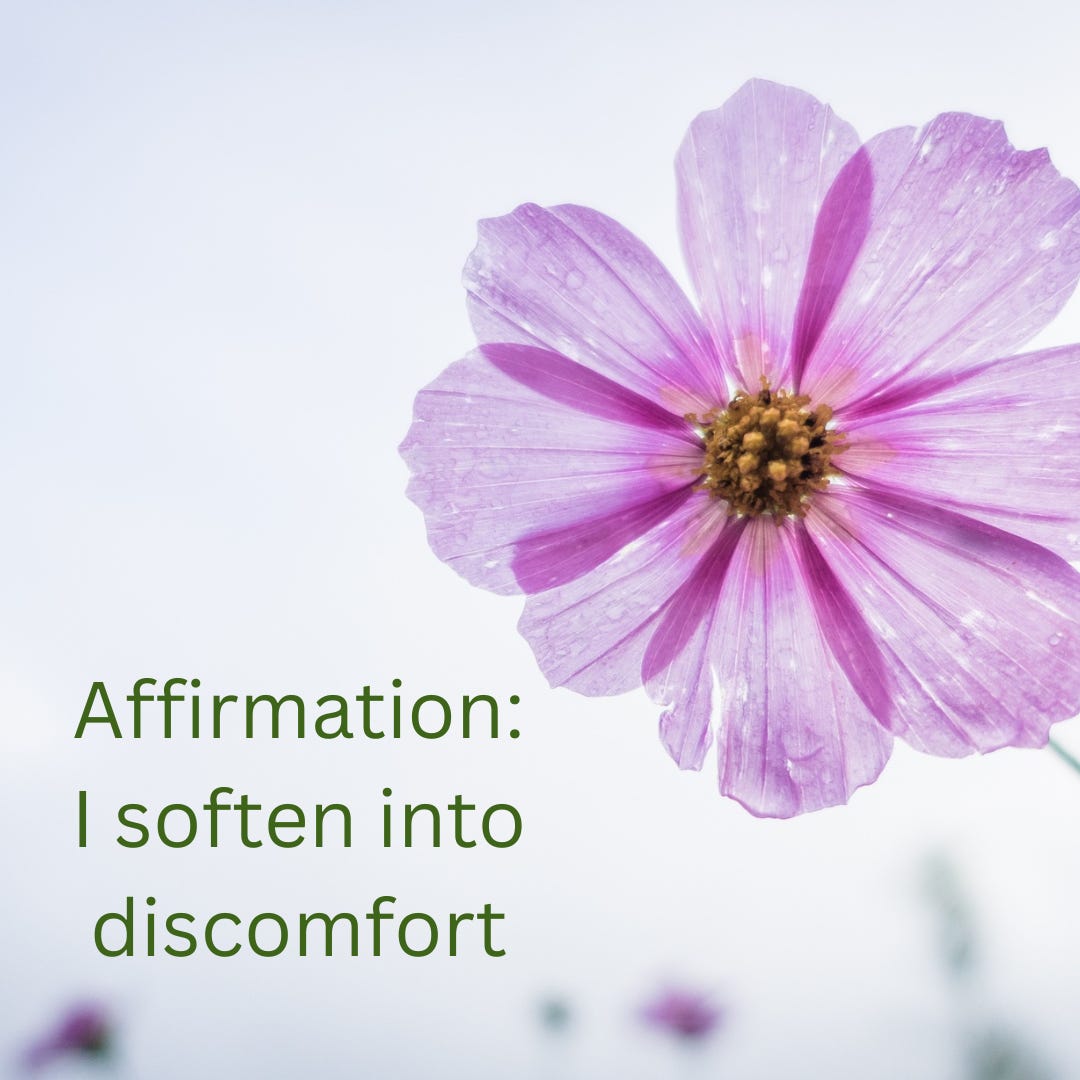
🌷Affirmation: I soften into discomfort.
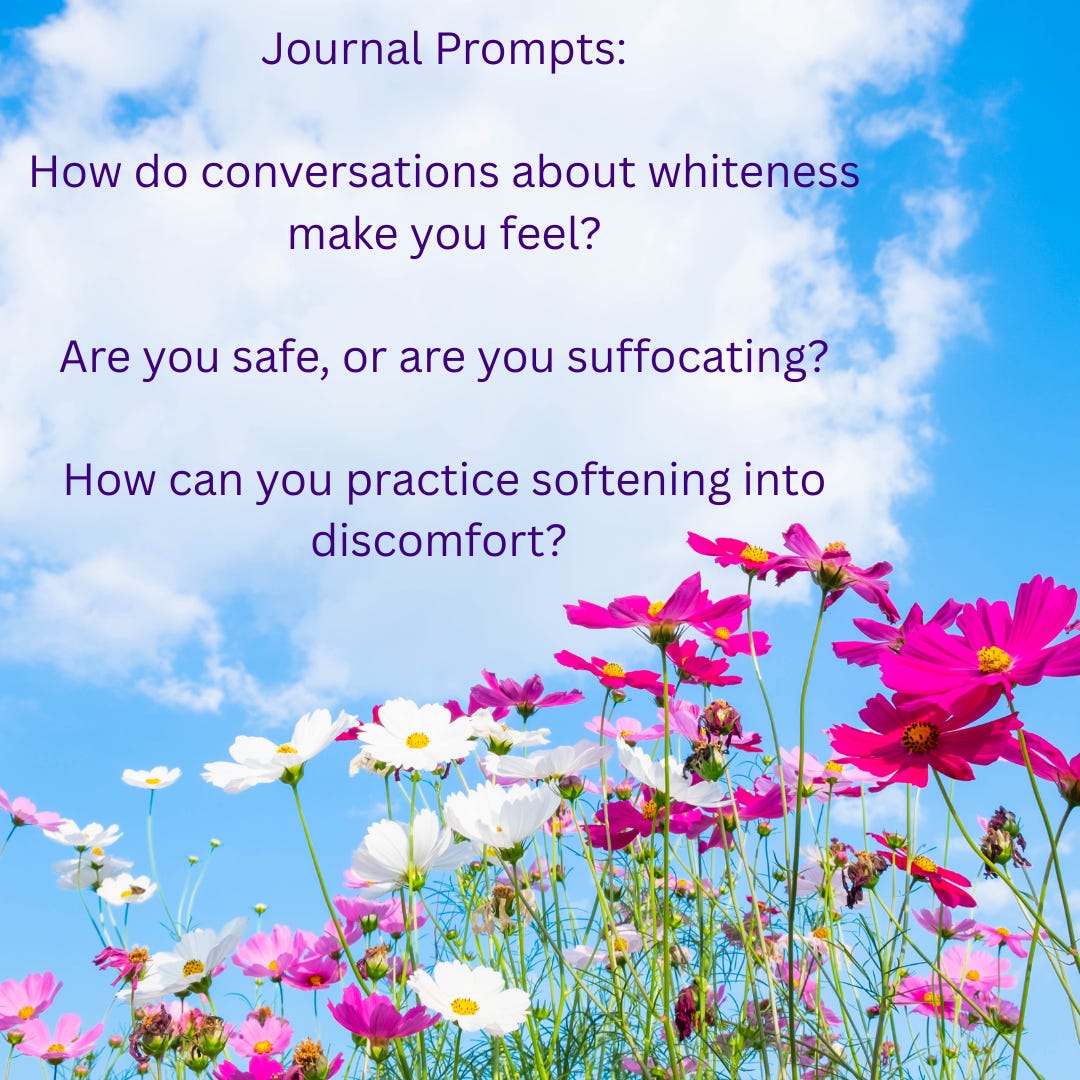
🌼 Journal Prompts: How do conversations about whiteness make you feel? Are you safe, or are you suffocating? How can you practice softening into discomfort?
🪻Next Up: Compost #4: Control
💐 Related Bonus Essays: